
Stoneflies and Centipedes
The downpour began in earnest at bedtime, which was convenient, since we were getting in the tent anyway.
The tarps, over the rainfly, over the tent, blocked out most of the waning sunlight. It was dark – too dark for reading bedtime stories, yet I persisted, even as water seeped in along the tent’s perimeter.
One towel, two towel, three towels, more. I ringed the entire tent floor in towels and bed sheets, laid end to end like a line of water-fighting soldiers. I moved everything else toward the center of the tent, including me and the kids.
My husband braved the deluge to add extra bungees and duct tape to the tarps, while we stayed inside, relatively dry.
“What’s that?!” one of the kids cried out.
We could see the silhouette of a monster crawling up the side of the tent.
It was a centipede, but larger than any I’d seen before – at least five inches long, two inches wide. It was crawling to safety under our tarps. My husband flicked it away, and we hunkered down together in our thin nylon home.
Yet, we were optimistic when going to bed that night. It was only calling for an inch or so of rain; the worst of it shouldn’t come until later in the week.
But we learned something in the north-west corner of North Carolina this year. We learned that “partially cloudy” has a different meaning in the mountains than it does at the coast. In the mountains, it means you’re in the cloud, and it’s raining, and it just doesn’t stop. It doesn’t “rain itself out” like it does at the beach. Instead, the entire, limitless ocean dumps down on you. Ditches turn into creeks, rivers turn into rapids, and water springs from the very ground below.
My husband woke at 2:45am, to rain like a thundering train, afraid that his truck would roll into the river.
The truck sat on a steep hill beside our tent. Did I say hill? I meant waterslide. There were rivulets under the tires, and the river was just a few yards away, and rising. He wedged rocks under his tires, came back in the tent, and woke me up.
“I think we should leave. We can drive around town until we find a breakfast place.”
“It’s three am, and there is no town nearby. Plus, the campground gate is closed. We can’t get out until morning.”
“We could go to the bathhouse and take showers, then sit at the gate and wait.”
“Showers? Sit at the gate? Do you really think the truck’s going to roll into the river?”
“No, probably not.”
“Is the river about to cover the road so that we can’t get out?
“Not anytime soon.”
“Then I’m going back to sleep.”
In the morning, we packed up the wet tent, wet towels, wet kids, and evacuated to a VRBO farmhouse.
As I stripped off the tarps and rainfly, I unveiled layer after layer of our creepy-crawly midnight companions.
There was a centipede, large and red, like the shadow monster from the evening before. There were a few dozen daddy longlegs and even more crickets, and there were stoneflies. I was new to stoneflies.
I’d seen their discarded exoskeletons on rocks by the river, cracked along the tops like locusts. I looked them up on iNauralist – stonefly nymphs live in the water, but they crawl to land and shed their old “shells” when they become adults, turning into flying insects. Some chose our tent for their transformation.
During our vacation, I read Annie Dillard’s Pilgrim at Tinker Creek. I loved this book. Dillard’s poetic observations about nature at a Virginia creek were a perfect read for our trip. Dillard considers many subjects in Pilgrim, including bugs.
“Fish gotta swim and birds gotta fly; insects, it seems, gotta do one horrible thing after another,” she writes.
Dillard spends much of the book elaborating on the horrible things that insects do – eating each other, parasitizing each other, and generally creeping and crawling.
But she asks, “Why do we turn from the insects in loathing? Our competitors are not only cold blooded, and green- and yellow-blooded, but are also covered in clacking horn. They lack the grace to go about as we do, softside-out to the wind and thorns. They have rigid eyes and brains strung down their backs. But they make up the bulk of our comrades-in-life, so I look to them for a glimmer of companionship.”
Insects account for 80% of animal life on Earth. If you’re alone on a mountainside in a thunderstorm, at least you have bugs for company. Lots of bugs.
Over the next three days, it never stopped raining for more than ten minutes at a time. It rained a total of sixteen inches.
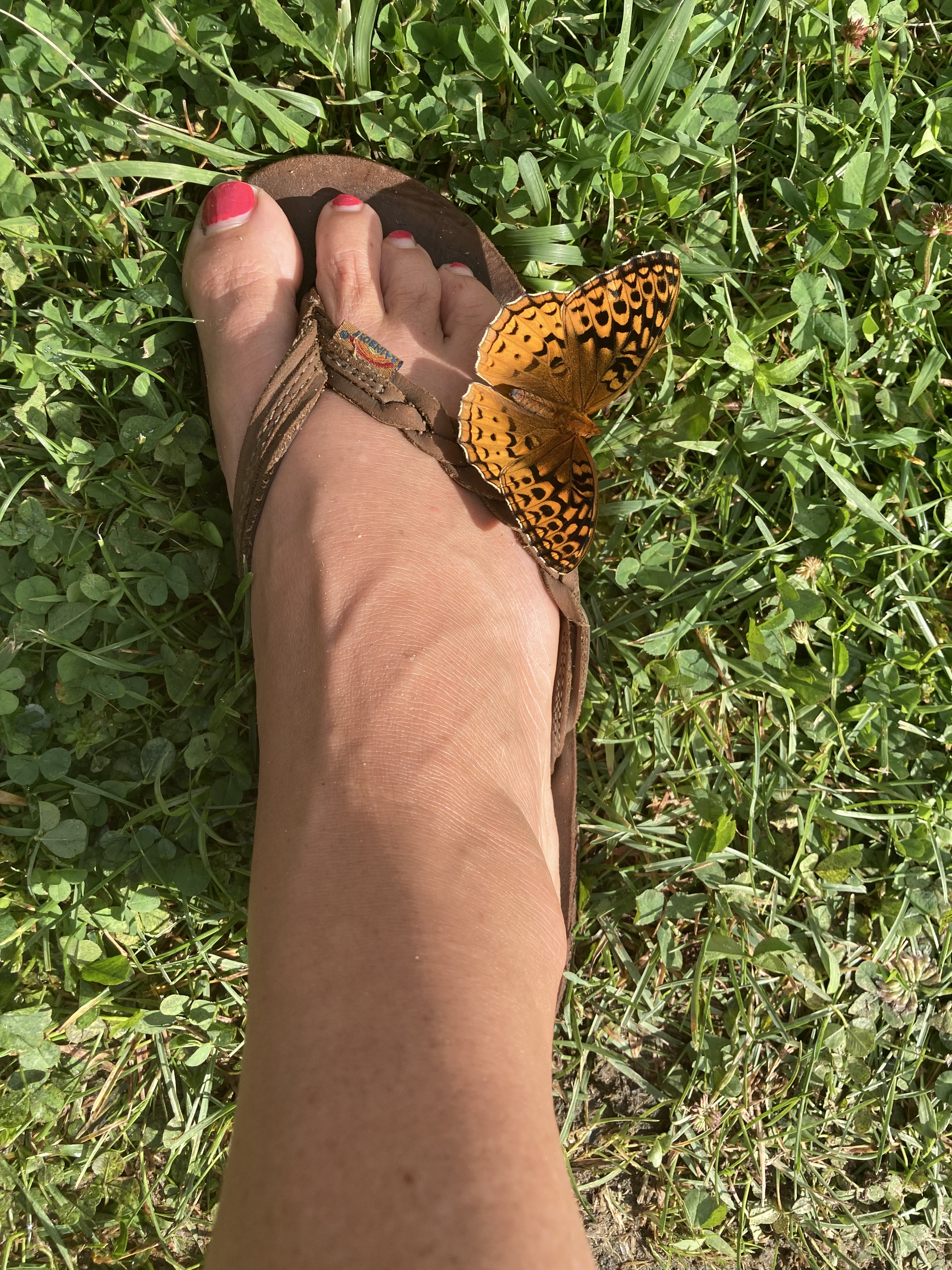
But on that last day of our vacation, the sun came out as we packed up to go home. The boys played in the ditch by the farmhouse driveway, which by then had turned into a respectable creek. Enchanted by their happiness, the warm sun, the hay fields, mountains, and creek, I stayed still long enough for a butterfly to alight on my foot. It didn’t move until I moved.
Hello, friend. Rough week, huh? That sunshine sure does feel nice, though, doesn’t it? Thanks for stopping to visit. See you next time!
by Jessi Waugh

 Jessi Waugh Writer
Awwwww, that’s just like the weather to clear up on the last day. It’s a good thing you live at the beach so you can make up for the rainy week in the mountains. We’ve got PLENTY of sunshine.
LikeLike