Trailer
Park
Date
I’ve seen paradise, and it’s a trailer park.
I remember, years ago, driving through a mobile home community around Varnamtown, NC, and suspecting I’d stumbled into heaven. It bordered the Intracoastal Waterway near the NC/SC line – I could hear the ocean’s waves; sailboats drifted by with the seasons. The land was lush and green, with dirt roads winding in loops and curlicues. Little ponds dotted the neighborhood, wooden bridges spanning their bellies.
Garden gnomes and other cast concrete decor were sprinkled generously throughout, weeping willows grew tall and sad, and towering live oaks spread their canopies over benches and gazebos. The trailers were neat and tidy – lace curtains in their windows and flowerbeds wrapping around their bases. It was so beautiful, I might have dreamed it. Despite looking several times afterwards, I could never find that place again. Ah, Shangri-La, you are not for mere mortals like me.
Thus, in pursuit of mobile home transcendence, I took my Artist’s Date last week at the Oceanana Pier trailer park in Atlantic Beach. Artist’s dates are from the Artist’s Way, which I’m reading with other Carteret Writers members. I can’t get on board with all the book’s assignments, but I love Artist’s Dates. It’s just the sort of thing I do anyways, except I call it fooling around, messing about, or doing nothing much. Now I can say I’m on an Artist’s Date and sound important.
I’ve been wanting to photograph the Oceanana Pier trailer park for a while now, before it’s gone. The land owner will be building fancy new high-density housing, so all the old buildings must be removed. Since some are too long in the tooth to gallop out on their own, they’ll be forcibly hauled off to the glue factory. It’s sad.
It’s sad because coastal trailer parks are an endangered species. Property values have risen, and land owners can benefit more from duplexes, vacation mansions, or condos. Beach life is becoming less accessible and more expensive.
Like piers – in the sixties, there were thirty-three piers on the NC Coast. Now there are nineteen, maybe less. Each time one is storm-damaged, the cost to rebuild is weighed against the profits from selling, and it’s no contest.
That’s unfortunate, since piers are a place for everyone. Most of them let you walk the pier for free, and for the cost of parking, you can go to the beach, play a game of pool, fish for a few bucks, or just see what other people caught. They are public beach accesses, surfer magnets, teen hang-outs, a place to meet folk from all walks of life and tap into the coastal community.
There was a pier by my dad’s house, the Indian Beach Pier – we’d walk its length, see the fish brought in, and catch our own pinfish and spot. The pier house had candy machines, too, which hold a special place in my childhood memories. That pier is gone now, though its mobile home park is alive and well, with two-story trailers.
From my step-dad’s house, we could walk to the Sportsman’s, Oceanana, and Triple-S piers, but now, only the Oceanana remains. Fortunately, the owner plans to keep the pier in place. Check out this pic of the pier by my sister-in-law:
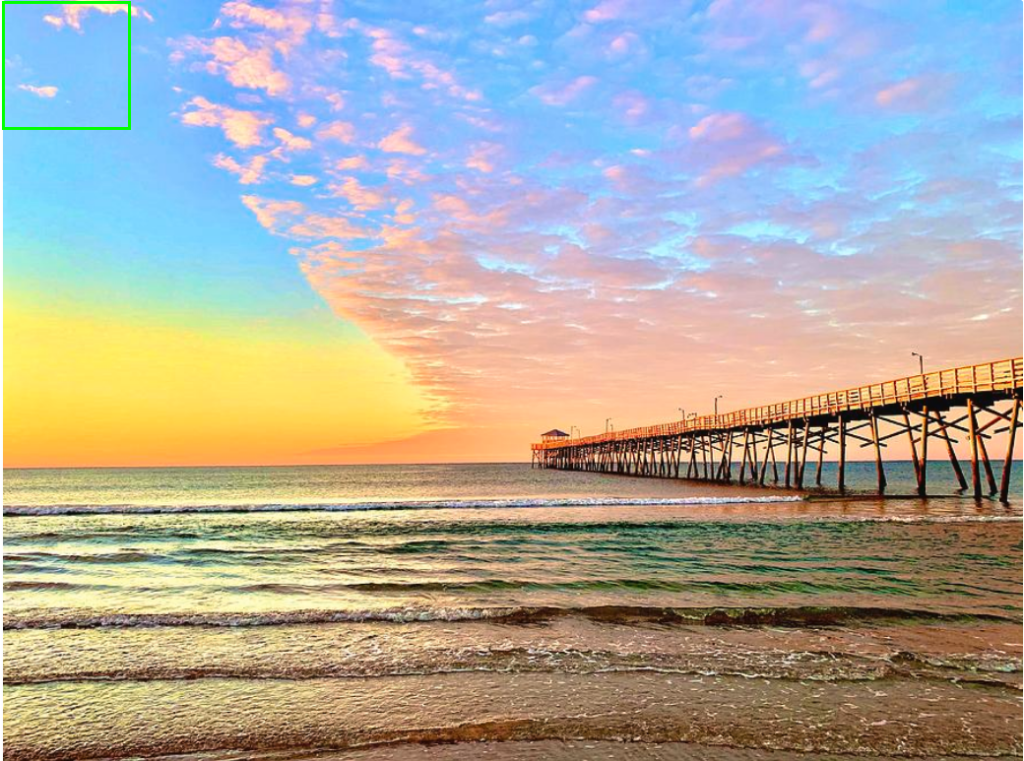
Now stop looking at that pretty picture, and let’s get back to my Artist’s Date.
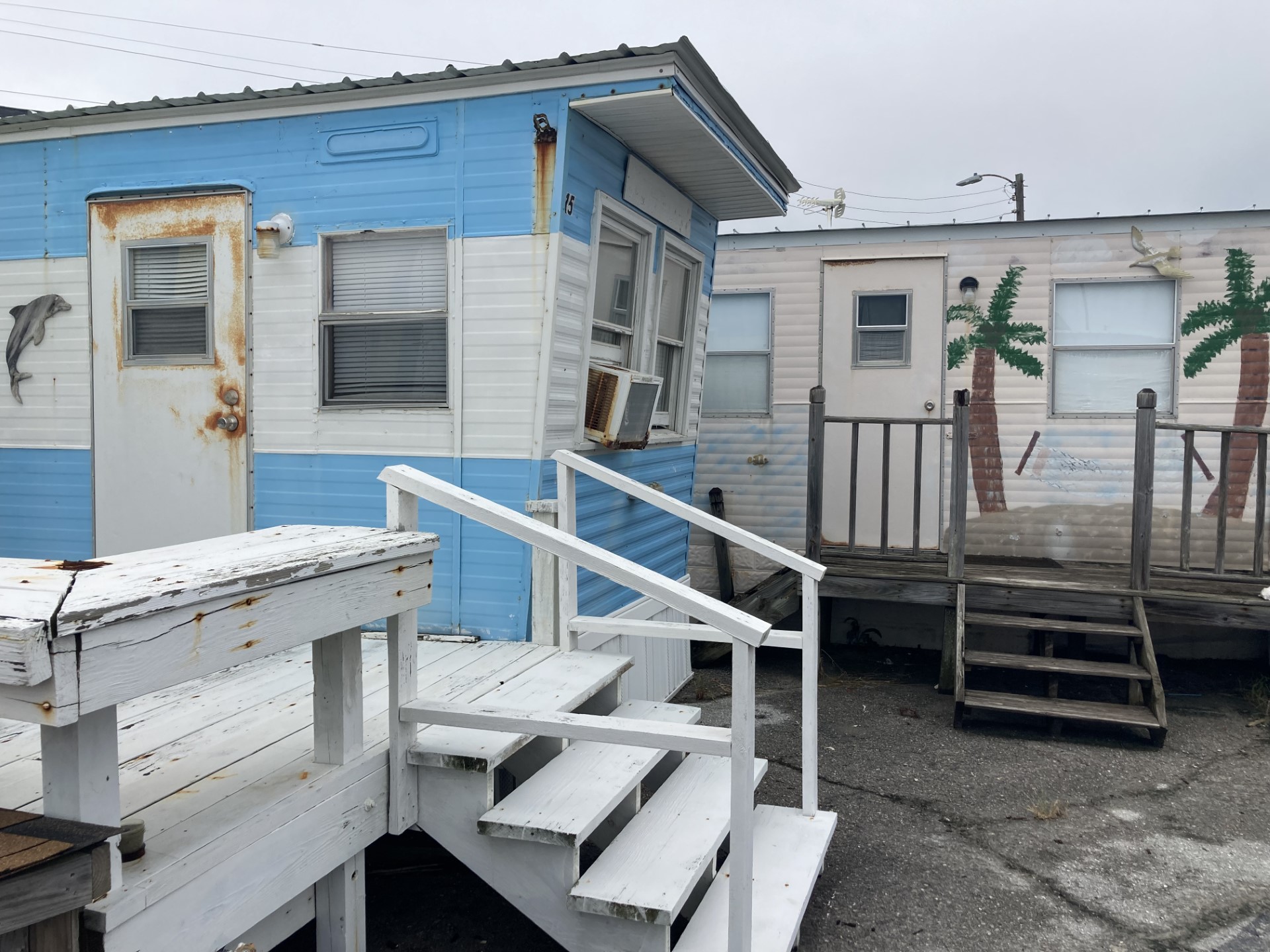
What I love about the Oceanana trailers is their personalities – the bright colors: Easter yellow, lime green, coral pink, aqua blue , and the hand-painted murals of palm trees, flip-flops, and sea life. They have names like Tiltin Hilton, Fishing Shack, Sandcastle – each unique while attached side-by-side to its neighbor, linked but not identical.
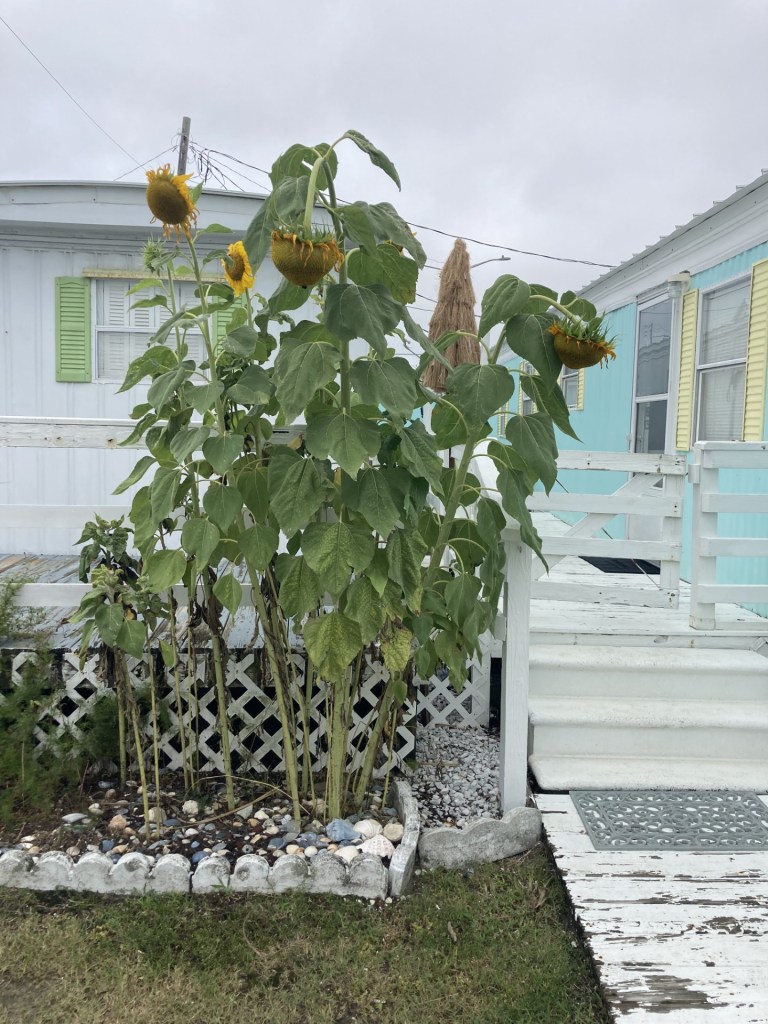
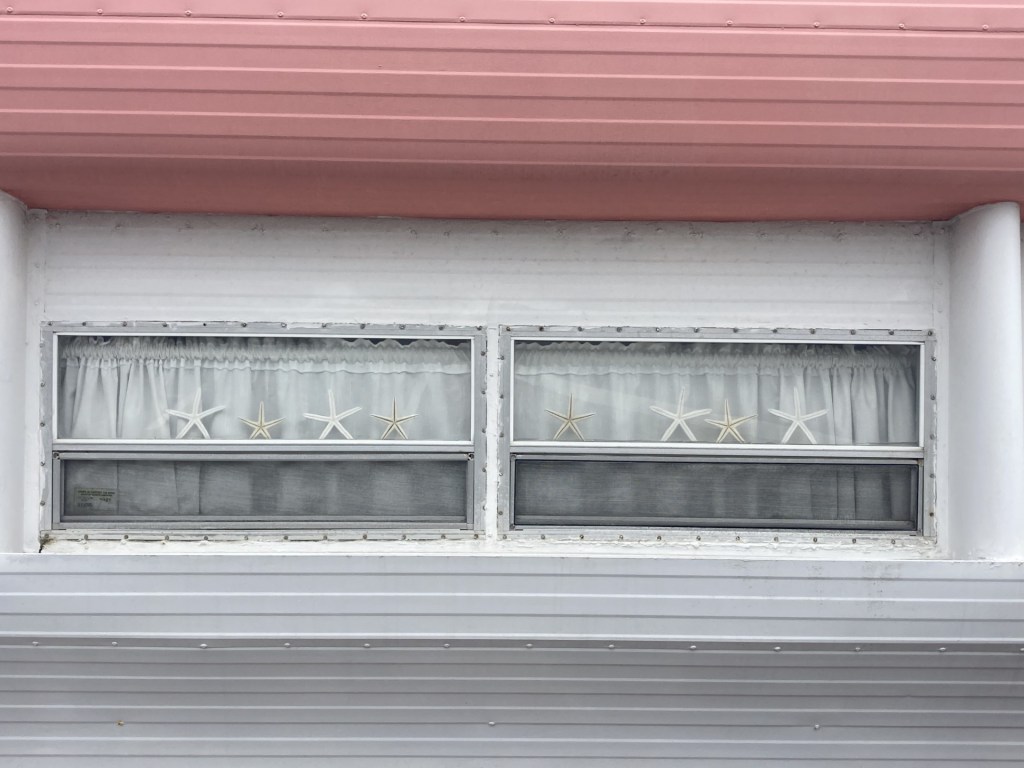
Family names grace plaques by front doors, and each home has an outdoor shower – often no more than a pipe and head attached to aluminum siding. Front porches feature grills, plastic rocking chairs, and doggie doors. There are rose bushes, pampas grass, and flower beds, lined in sea shells.
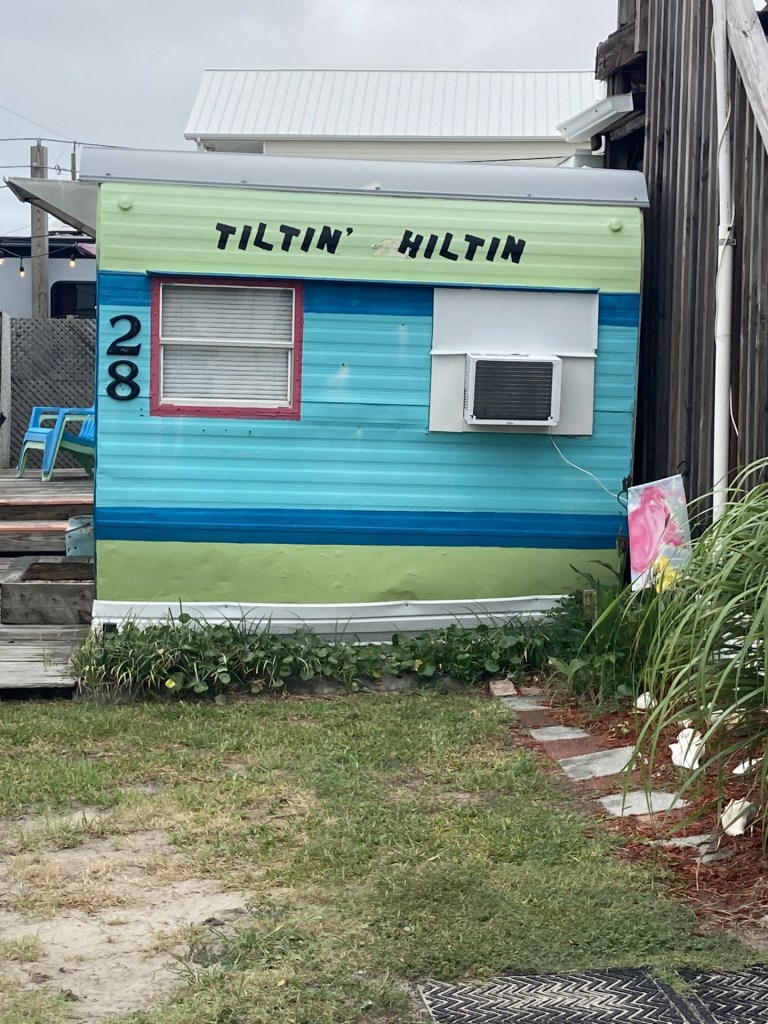
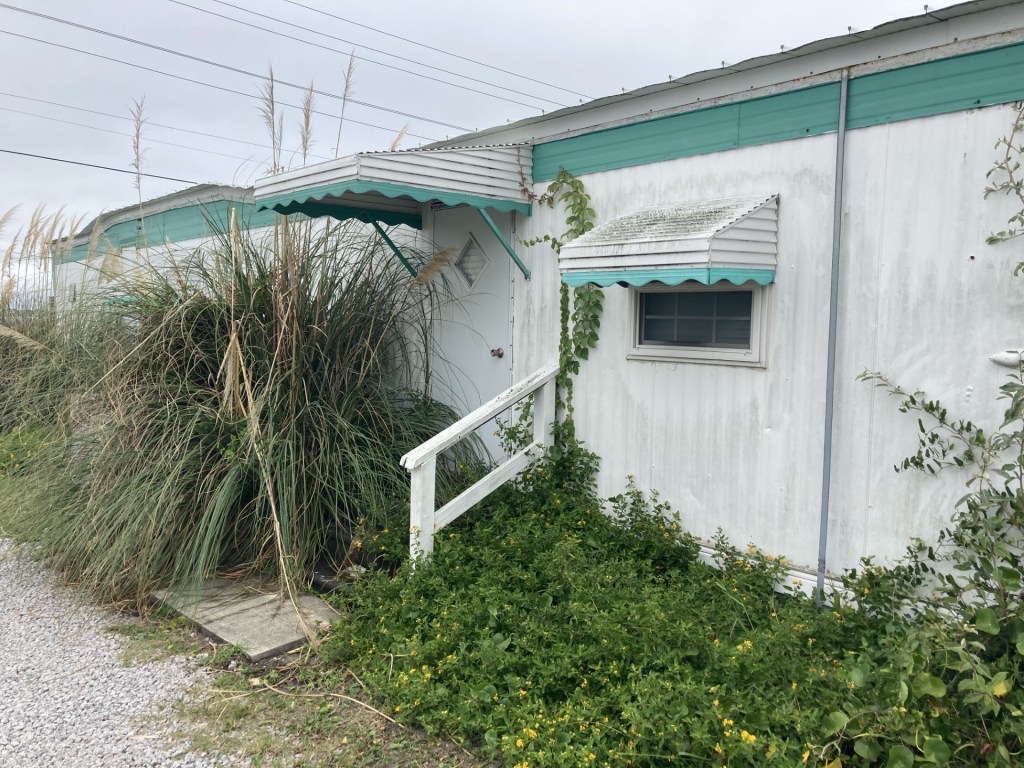
The Oceanana trailers are relics of a simpler time – with scalloped awnings, tiny windows framed with faux shutters, and window ACs. The hitches have all but rusted away, and I doubt they ever saw much action. Yet, they give the illusion of movement.
I’m currently re-reading Jan Yoors’ The Heroic Present: Life Among the Gypsies, his account of living with the Rom (European gypsies). I love their culture of impermanence – one old woman voices this as, “To the (gypsies) a candle is not made of wax, but is all flame.” Only the present moment matters.
Yet, a part of me also wants to document and bear witness to impermanent people and cultures, like Yoors did for the Rom. Like visiting a mobile home community before it’s destroyed.
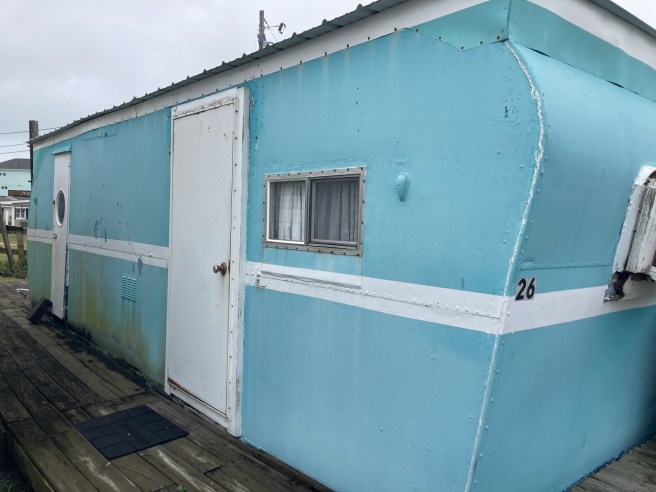
This is the kind of history I like – the beauty that people found in their everyday lives. I think erasing it leaves us all a little poorer, even with our expensive beach homes.
Like David Cecelski says in his most recent blog post about NC lumber mill boom towns:
“I am not sure why the mere knowledge of their existence matters so much to me, but it does: I sometimes fear that I am getting a bit like poor Noah, trying to get everybody on the ark before the flood.
As for the rest– the substance of the mill villagers’ lives, their love stories and broken hearts, their struggles for a better life, the songs they sang, the aromas of their camp kitchens and all the other things that really matter in our lives– that is left to our imaginations.”
I couldn’t have said it any better. Goodbye, Oceanana trailers!

 Jessi Waugh Writer
I love this post, Jessi! I feel the same way about the trailer parks here, even though I was only a visitor as a kid. In fact, reading this has given me a writing project idea that I’m going to email you about separately.
Loved this passage: This is the kind of history I like – the beauty that people found in their everyday lives. I think erasing it leaves us all a little poorer, even with our expensive beach homes.
And I for sure need to read more David Cecelski.
LikeLiked by 1 person
Tell him I sent you.
LikeLike