
Mullet Love Affair
Part 1
This weekend is the Swansboro Mullet Festival, where you can get jumping mullet fried whole, their little bones soft like canned sardines (which I I love). It’s also the start of mullet fishing season along Bogue Banks, and unfortunately, it could be the end of it as well.
This Thursday, the mullet crew will move their tractors and boats to Atlantic Beach, ready for the dark clouds of oily fish that swim along our shores in the fall. I’m interviewing one of the fishermen Friday, and next week’s post will consider the future of mullet boats and tractors on our beaches. This week, let’s remember their past.
The tractors, boats, and crews hail from Salter Path, an unincorporated community in the middle of Bogue Banks. I’ve been interested in Salter Path for awhile now – I lived nearby when I was a kid, and a few years ago, I researched the area extensively while writing my first historical novel, Carolina Siren Song. Tomorrow, I’ll begin a deep edit of that book, before working toward publication.
It all started with Judgement Land: the Story of Salter Path, by Kay Holt Roberts Stephens, a set of two books containing first-hand accounts of life in Salter Path during the 19th century. I found the stories compelling, and I wanted to capture that time and place in a novel, so I created a character in that setting, giving her adventures in that world and beyond. I hope it brings attention to the community’s interesting history and culture.
Mostly, folks pass through Salter Path on their way to somewhere else – to vacation condos, the beach, or the other end of the island, singing along to the car stereo or yelling at kids in the back seat to quit devilin each other. Maybe they stop for a shrimp burger at the Big Oak drive-thru or a Skeeter Don Burger at the Captain’s Kitchen food truck and wonder where the path is that gives the place its name.
Salter Path got its name from the trail made by people carrying barrels of mullet from the beach to a soundside dock for shipping. Later (in the 1920s), a tram moved the fish from shore to shore. The original Salter’s path lies at Professor Hacker’s Lost Treasure Golf, which has a trolley to take mini golfers to the top of the putt-putt course, a coincidence I find charming.
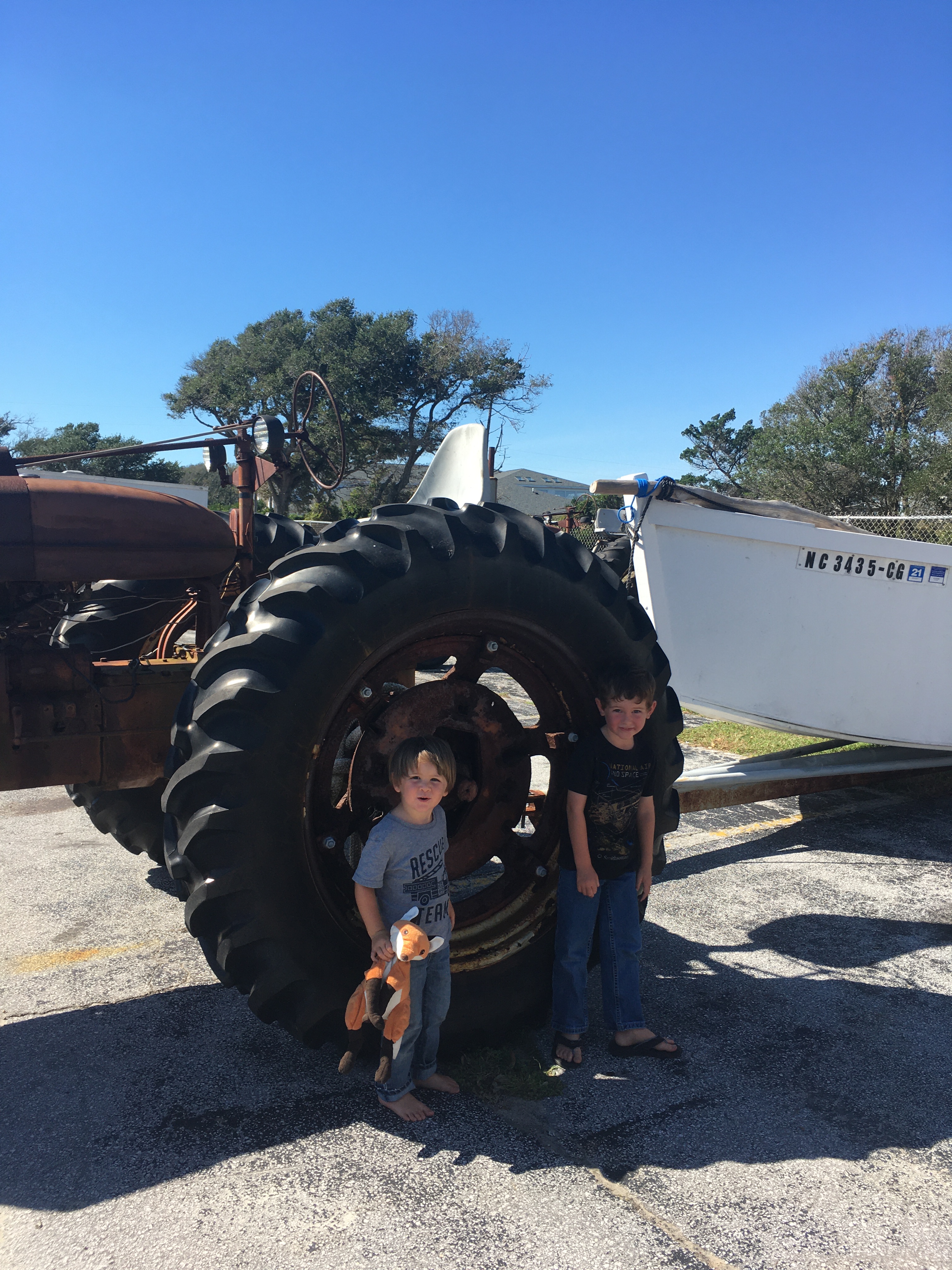
At the other end of Salter Path is Rice Path, named for for a ship full of rice that wrecked offshore and was salvaged by locals about 1865. This is where the tractors and wooden boats wait before being deployed on the beach; they are there right now. They are relics of a tradition dating back more than a hundred years.
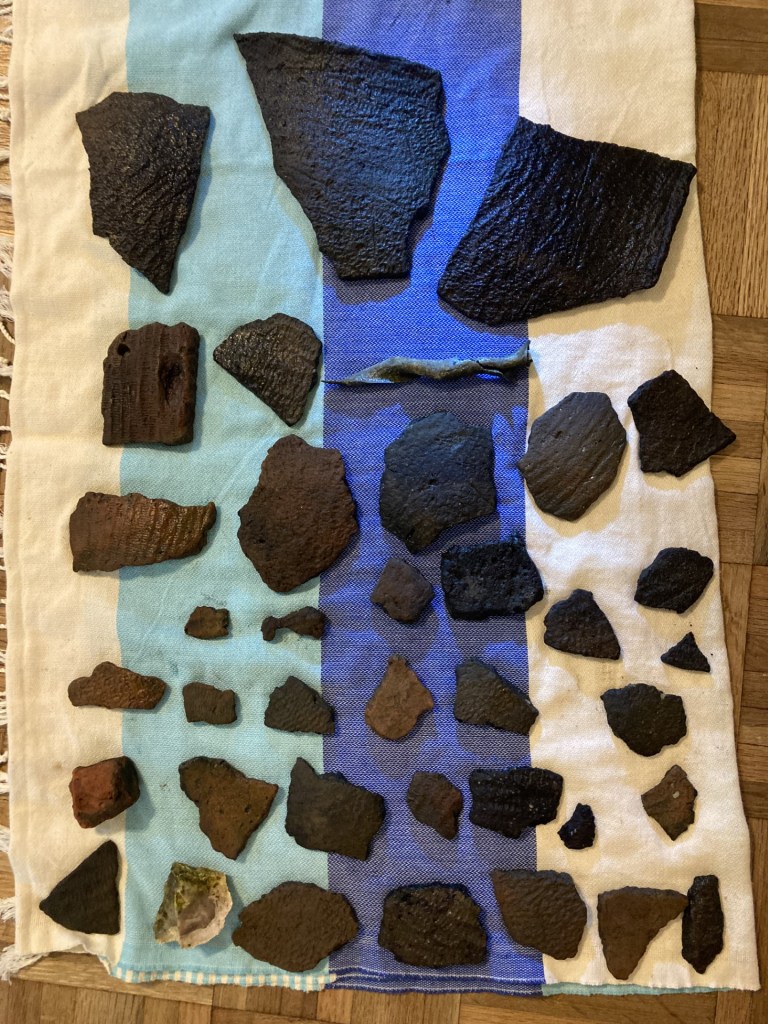
Salter Path was first settled in the late 1800s, though people had lived in small communities along Bogue Banks for much of that century, shifting as the winds moved sand, flooded gardens, or changed fish distribution. Even before that, people lived on Bogue Banks: Native American relics and bones have been found along the island, and it is these artifacts that give the town around Salter Path, Indian Beach, its name. One of these relics features in my book. I’ve even found similar pottery myself in the marsh, slowly washing away with sea level rise.

Many Salter Path residents came from Diamond City, a village on Shackleford Banks devastated by hurricanes in the late 1800s, culminating in the “Great August Storm of 1899.” Theirs are stories of survival, faith, family, and love of the coast.
I could write a series of posts about Salter Path and Bogue Banks in the 19th century, but I won’t, at least not right now. For now, let’s focus on the mullet.
Before ice boats from Morehead City began collecting Salter Path’s catch, the locals gutted the fish on the beach, washed them in handmade baskets in the surf, and salted them in wooden barrels: for winter sustenance, selling, or to trade for corn and sweet potatoes from inland farms.
Originally, the mullet were netted and pulled in by hand, but now a skiff with a motor circles the fish, and a tractor or two pull in the catch. It still takes a strong and skilled crew, and only a handful of people carry on the tradition.
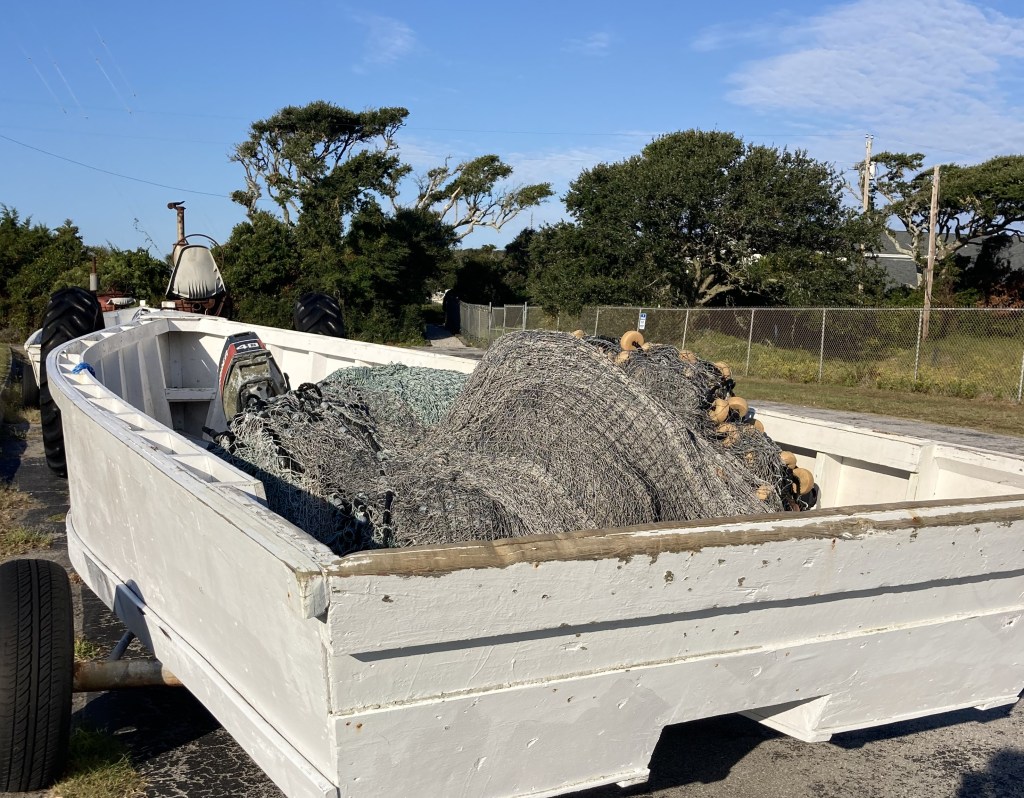
The boats sit on hand-made trailers, needing a fresh coat of whitewash (ask Tom Sawyer), their sterns sanded smooth by the nets and hands that have passed over them. The only new parts are the inspection sticker and Commercial Fishing Vessel Registration. Inside, they carry yards of net, floats, ropes, and posts made of cedar tree trunks, ready for work.
The old Farmall tractors are painted tie-dye rust and run on WD-40 and elbow grease. They sit tall and regal. These are beach tractors, valued for their usefulness, not their beauty. But oh, what beauty there is in usefulness. If you pass the tractors and boats this week, stop and spend some time with these pieces of living art and history, before they’re gone.
– by Jessi Waugh

 Jessi Waugh Writer
You’ve really done your research, lady! You makes history feel like it’s happening right now. Can’t wait to read the novel!
LikeLike
It is!
LikeLike
The details you provide are an enjoyable read. Such as “tie-dye rust and run on WD-40 and elbow grease” or “yelling at kids in the back seat to quit devilin each other.”
An insightful writing of Salter Path. Please finish “Carolina Siren Song.”
LikeLike
Thanks Stanley!
LikeLike